
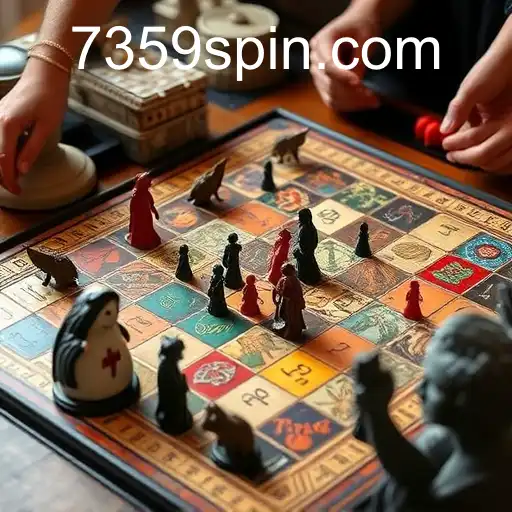
7359 | Exploring the World of Tabletop Games
7359’s Discover the captivating world of tabletop games including their types, history, cultural impact, and technological advancements.
The Rich World of Tabletop Games: An Exploration of Creativity and Strategy
Tabletop games have been a crucial part of human culture, fostering social interaction, creativity, and strategic thinking. From the classic games of ancient times to the sophisticated board games of today, they provide countless hours of entertainment and challenge. One fascinating aspect of these games is how they stimulate the mind while creating a sense of community amongst players. In this article, we delve into the intricate world of tabletop games, each unique for its gameplay mechanisms, thematic elements, and the universal appeal that makes them popular amongst diverse audiences.
A Brief History of Tabletop Games
Tabletop games trace back thousands of years, with early examples such as the Royal Game of Ur played in ancient Mesopotamia. Over centuries, these games have evolved, incorporating complex rules and diverse materials. Chess and Go are notable examples that originated in the periods of modern human civilization and adapted through various cultures. Each game tells a part of history, showcasing the evolution of human strategic thought and cultural exchange.
Types of Tabletop Games
1. Board Games
Board games are perhaps the most recognized category within tabletop games. These games typically involve the movement of pieces around a predefined surface or board according to a set of rules. Classics like Monopoly and Catan are staples in many households, beloved for their combination of luck, strategy, and interaction.
2. Card Games
Card games offer endless possibilities due to their compact and versatile format. From intricate strategy games like Magic: The Gathering to quick, fun games like Uno, cards can host a vast variety of games that appeal to players of all ages and skill levels.
3. Role-Playing Games (RPGs)
Role-playing games drag players into a richly detailed universe, often requiring them to assume the role of fictional characters. Dungeons & Dragons is the quintessential RPG, loved for its ability to blend storytelling with strategic elements. These games are a haven for creativity and imagination, inviting players to create their unique storylines.
4. Miniatures Games
Miniatures games involve detailed figurines that represent characters or armies. These are often used in wargaming, where players simulate battles in a thematic setting. Games like Warhammer 40,000 offer intricately modeled miniatures and comprehensive rulesets, demanding both creative and strategic planning from participants.
5. Cooperative Games
Unlike competitive formats, cooperative games encourage players to work together towards a shared objective. Titles such as Pandemic and Forbidden Island have gained popularity for their collaborative gameplay, where player success relies on effective communication and teamwork.
The Cultural Impact of Tabletop Games
Tabletop games have significantly impacted culture by offering a universal medium through which people can connect. This was evident during the COVID-19 pandemic, where players turned to games like Ticket to Ride and Carcassonne to stay connected with loved ones while adhering to social distancing protocols. Furthermore, tabletop games have become significant in education, helping to reinforce concepts of problem-solving, critical thinking, and teamwork in engaging ways.
The Creative Design of Tabletop Games
Designing a tabletop game is a collaborative process that involves numerous disciplines, including art, writing, and game theory. Modern game designers employ iterative development, constantly refining rules and aesthetics to enhance player experience. The combination of story, mechanics, and art creates an immersive world where players are not just passive participants but active contributors to the unfolding narrative.
The Role of Technology in Tabletop Games
Technology has played a pivotal role in expanding the reach and complexity of tabletop games. Online platforms, like Tabletop Simulator, have allowed classic games to reach the digital realm, while apps accompanying physical games add layers of interactivity and depth. Technologies like augmented reality (AR) offer potential for future innovation, enhancing immersion while maintaining the tangible engagement that players love about physical games.
7359: The Intersection of Technology and Creativity
The innovation code 7359 represents the ongoing synergy between technology and creativity in the development of tabletop games. As the industry continues to grow, representing an intersection of traditional gaming with modern technological advancements, this unique field is poised to offer fresh experiences that change the way players interact both with games and each other.
For more insights and explorations of this dynamic realm, visit our homepage.
